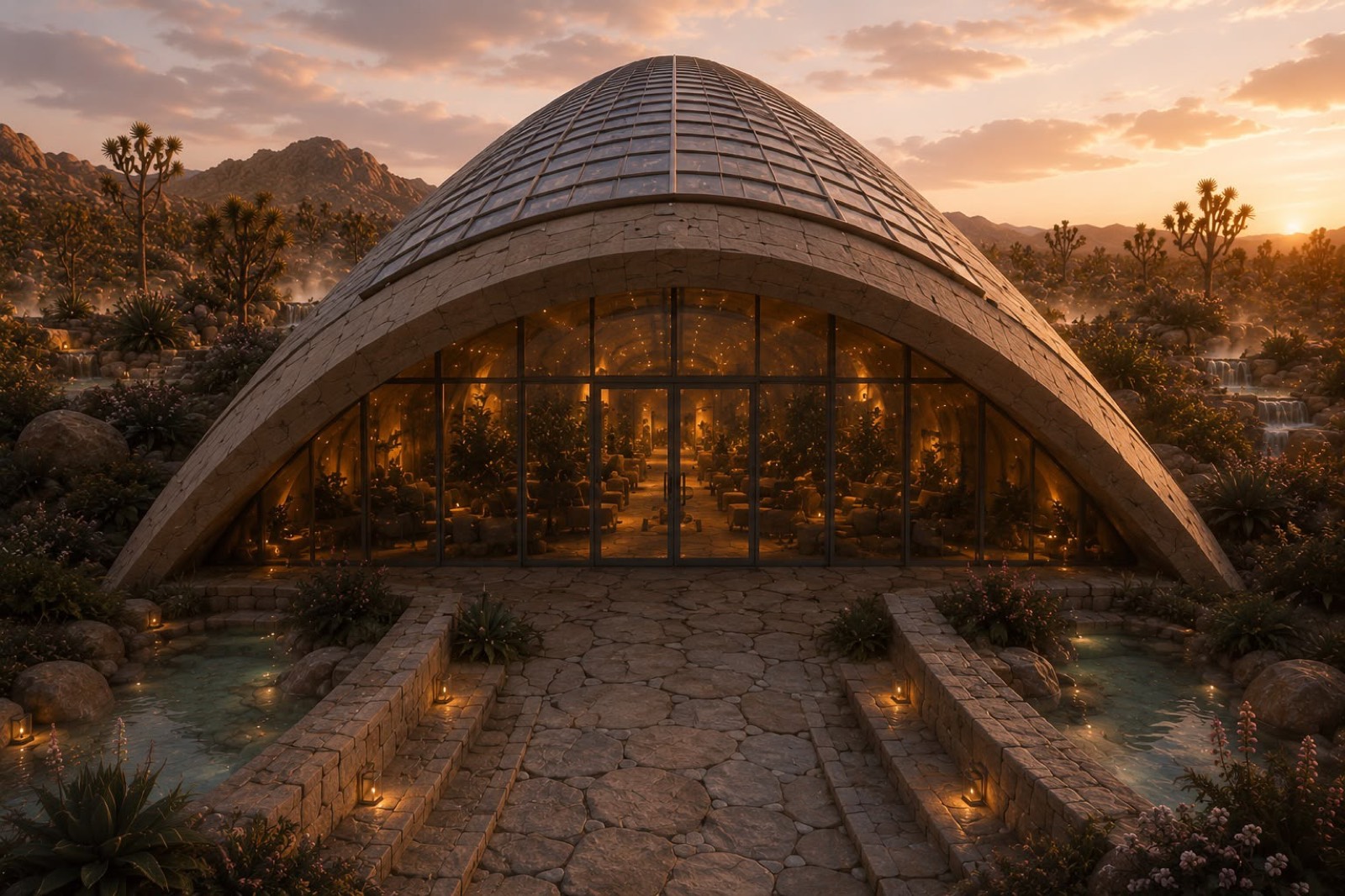
Papilio captures the waste heat of an AI data center and turns it into hot water, thermal baths, and a community campus people actually love.
AI needs enormous compute, so data centers are multiplying — and neighborhoods push back. They consume power, make noise, and feel extractive: the value goes to the cloud, the burden stays local.
Papilio reverses the relationship. The data center becomes the furnace. The bathhouse becomes the front door. The community gets the warmth.
Instead of dumping server heat into the sky, Papilio pipes it into hot tubs, warm pools, showers, radiant floors, and a public wellness campus — while the chips earn compute revenue the whole time.
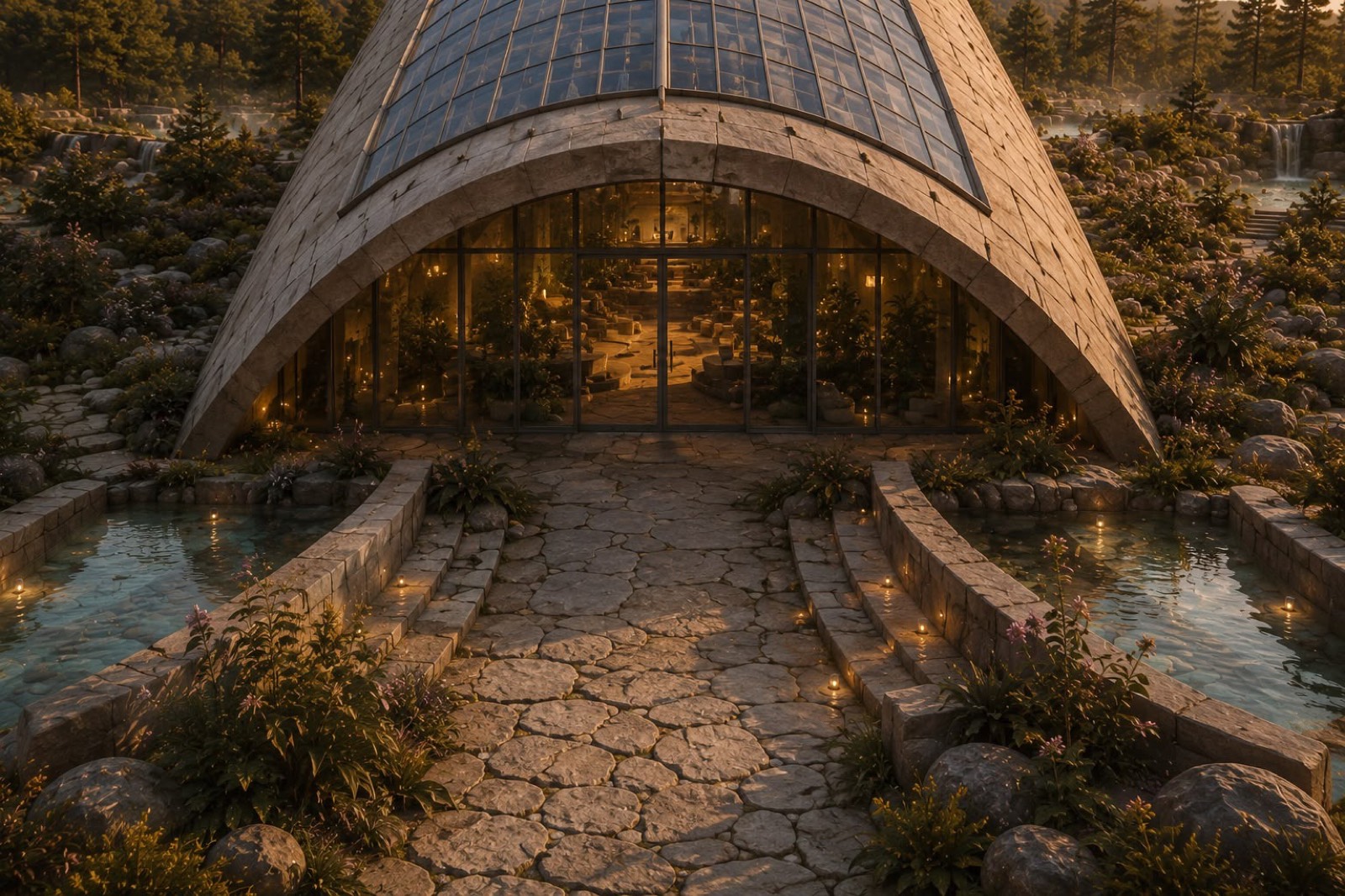
Papilio isn't one building — it's a pattern: a glass hall that earns, and warm pools that bloom around it. Set it down in high desert or lake forest, and it takes the shape of the land it's given.

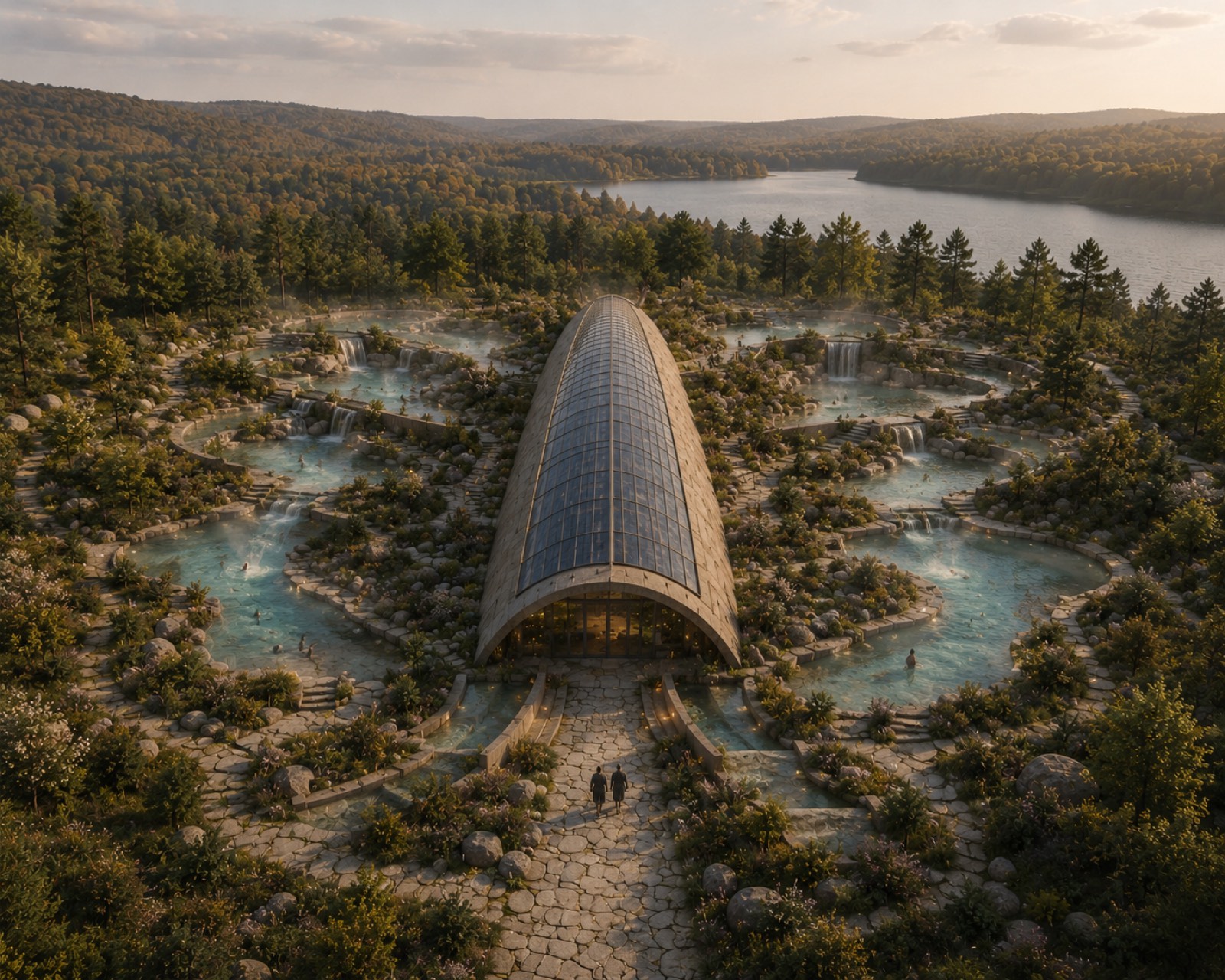
CONCEPT RENDERS — the glass hall is the data center; every pool around it is warmed by it.
This is not "chips in a hot tub." It's the same engineering used in hospitals, hotels, and district heating — applied to AI.
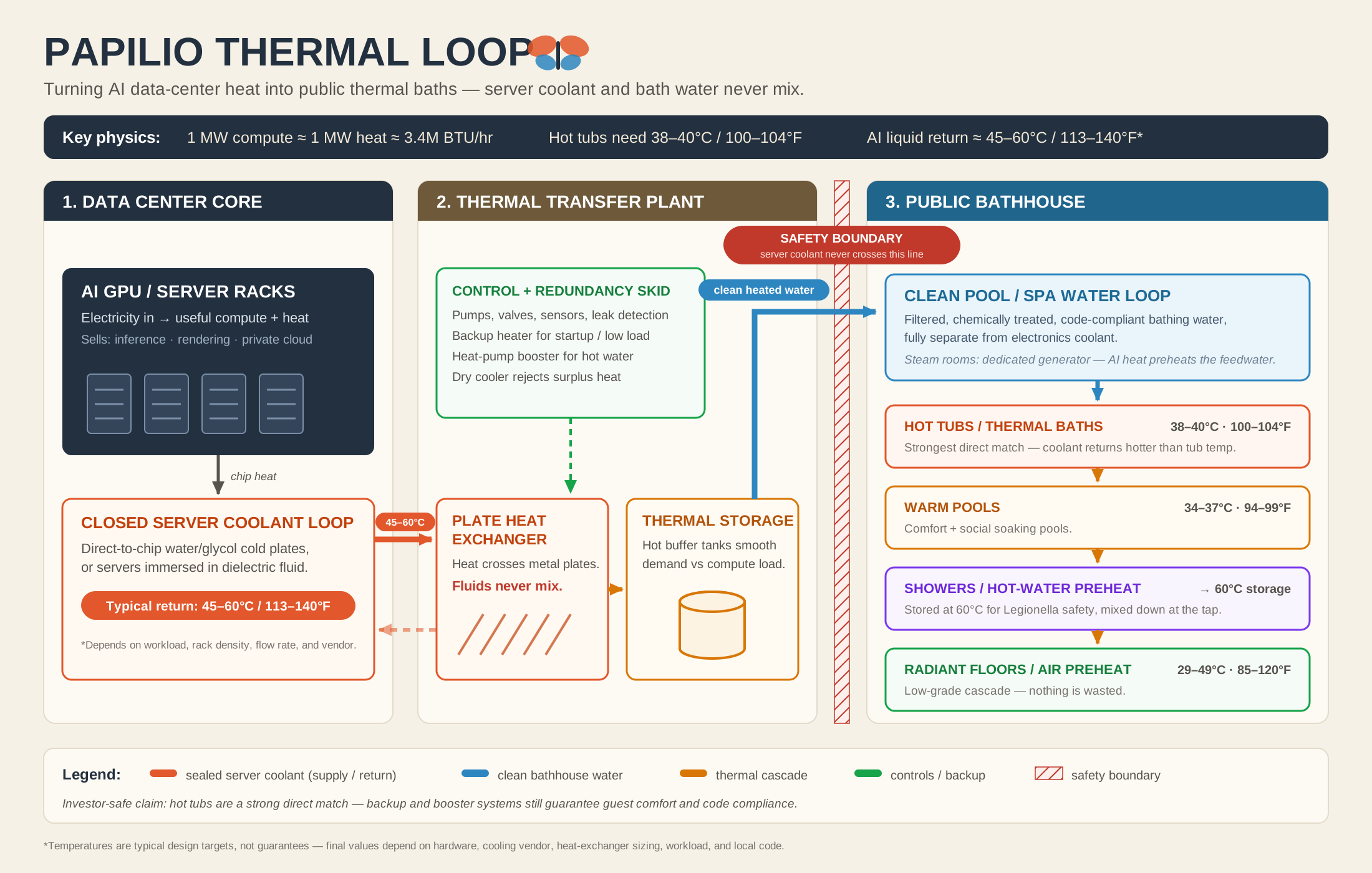
AI GPU racks run inference, rendering, and private cloud workloads — generating revenue and heat at the same time.
Direct-to-chip liquid cooling or immersion fluid pulls heat off the chips, returning at roughly 45–60°C.
Heat crosses sealed metal plates into a separate, clean water system. The fluids never mix — only the heat crosses.
Hot tubs first, then warm pools, shower preheat, and radiant floors — each stage using what the last left behind.
THE PAPILIO THERMAL LOOP — temperatures are design targets; backup and booster systems guarantee comfort and code compliance. Swipe the diagram to explore →
Every degree gets a second life.
Papilio is designed to sit next to wind and solar the way Texas data centers sit next to gas pipelines. Same logic, opposite bet. Here's the honest version of that promise.
It computes, then it warms the water. A conventional bathhouse burns gas to heat its pools — Papilio's reused compute heat replaces that gas.
Clean power matched to what we actually use, every hour — not offsets, not certificates, not accounting tricks on paper.
A pilot this size can live beside its own solar panels and batteries. AI jobs can wait when the battery runs low — and the water itself banks the heat.
Around the world, compute heat is already warming pools, spas, homes, and whole districts. Papilio is the first to make it the centerpiece of a public campus.
Compact GPU data centers heat public swimming pools and leisure centers, cutting the pools' heating bills.
A working spa where bitcoin miners help heat the pools — proof that compute-heated bathing is real and people love it.
A pioneer of "computing as heating" — servers deployed as heaters for buildings and industry since 2010.
Servers mounted on home hot-water tanks give households free hot water while doing useful compute.
Data-center operators feed waste heat into district heating networks that warm entire communities.
High-density AI racks are moving to liquid cooling as standard — which makes heat recovery dramatically easier.
Papilio is designed to be the one data center a neighborhood asks for — because the neighborhood is invited in.


CLOSE-UPS FROM THE CONCEPT SET — art direction by Lucas McGowen.
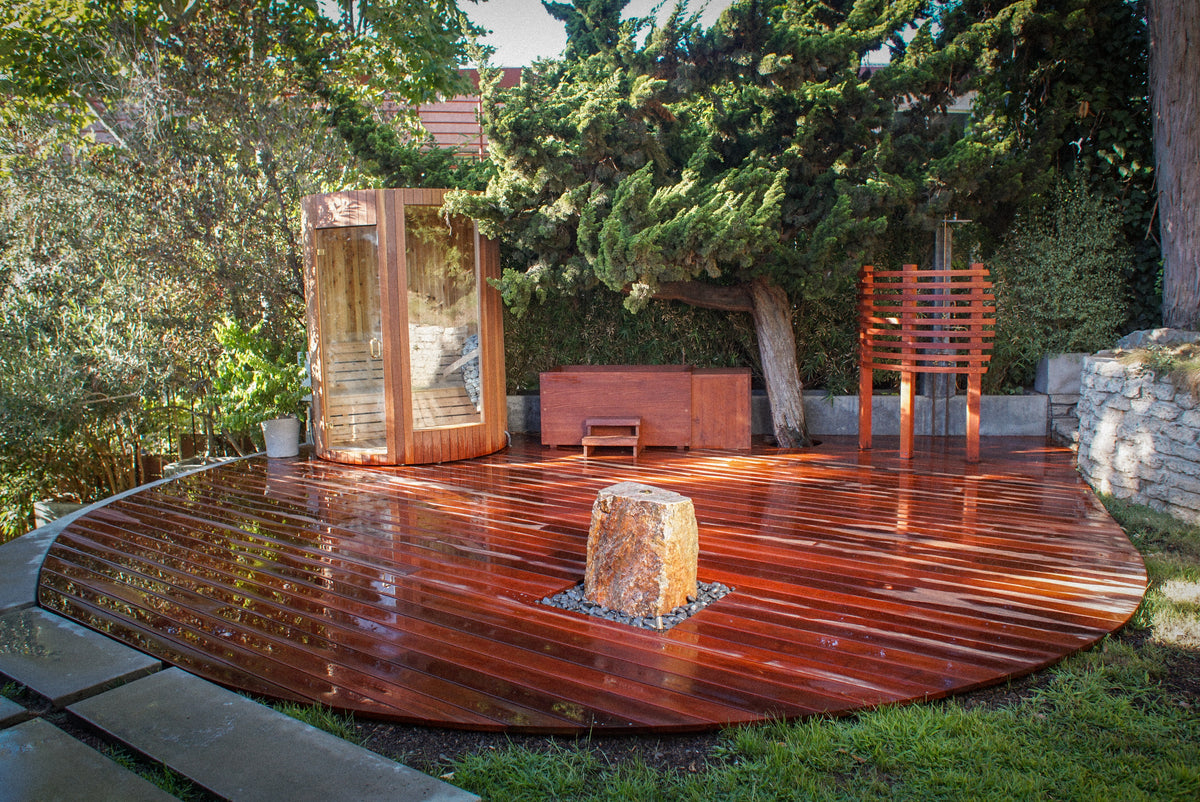
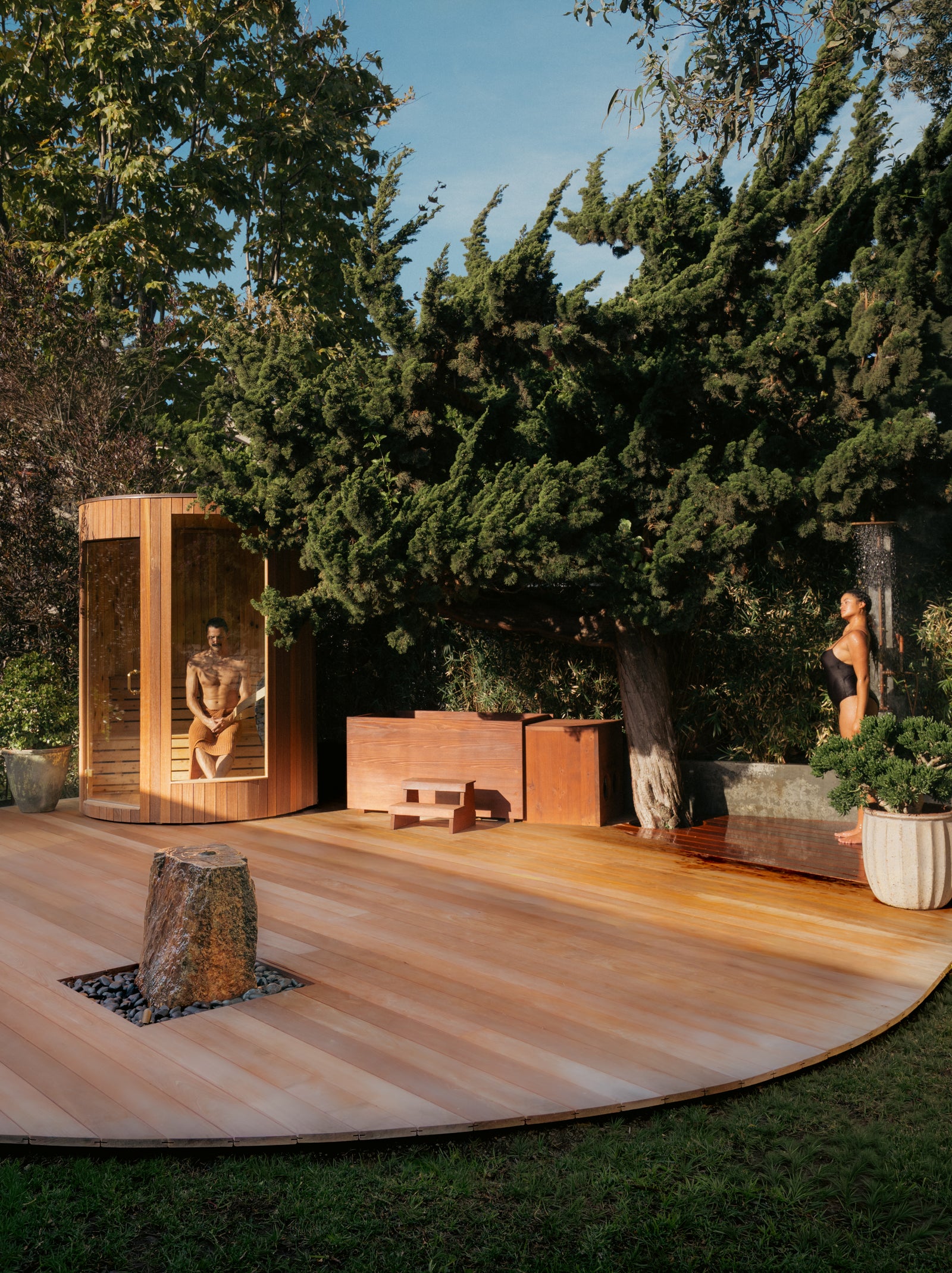
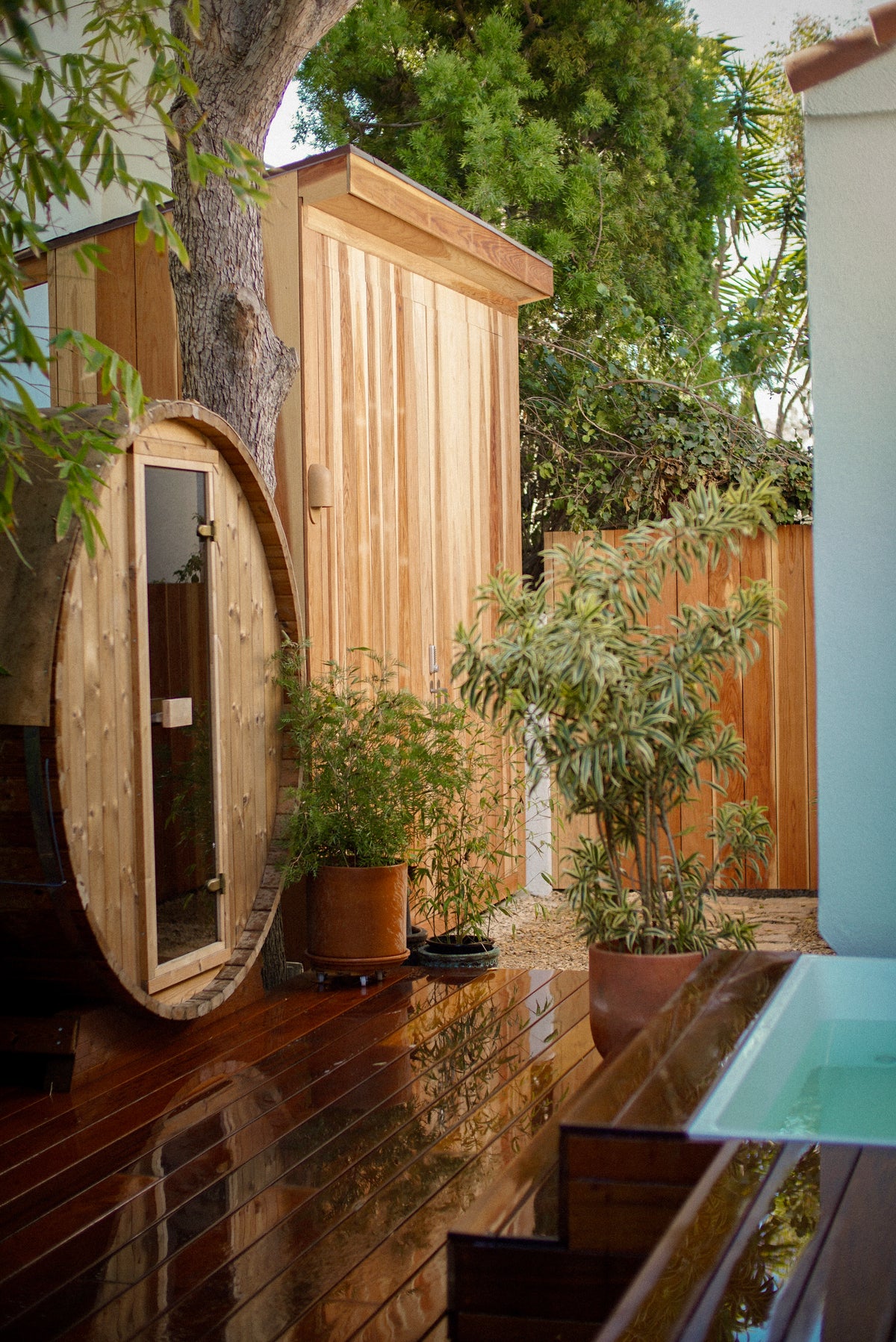
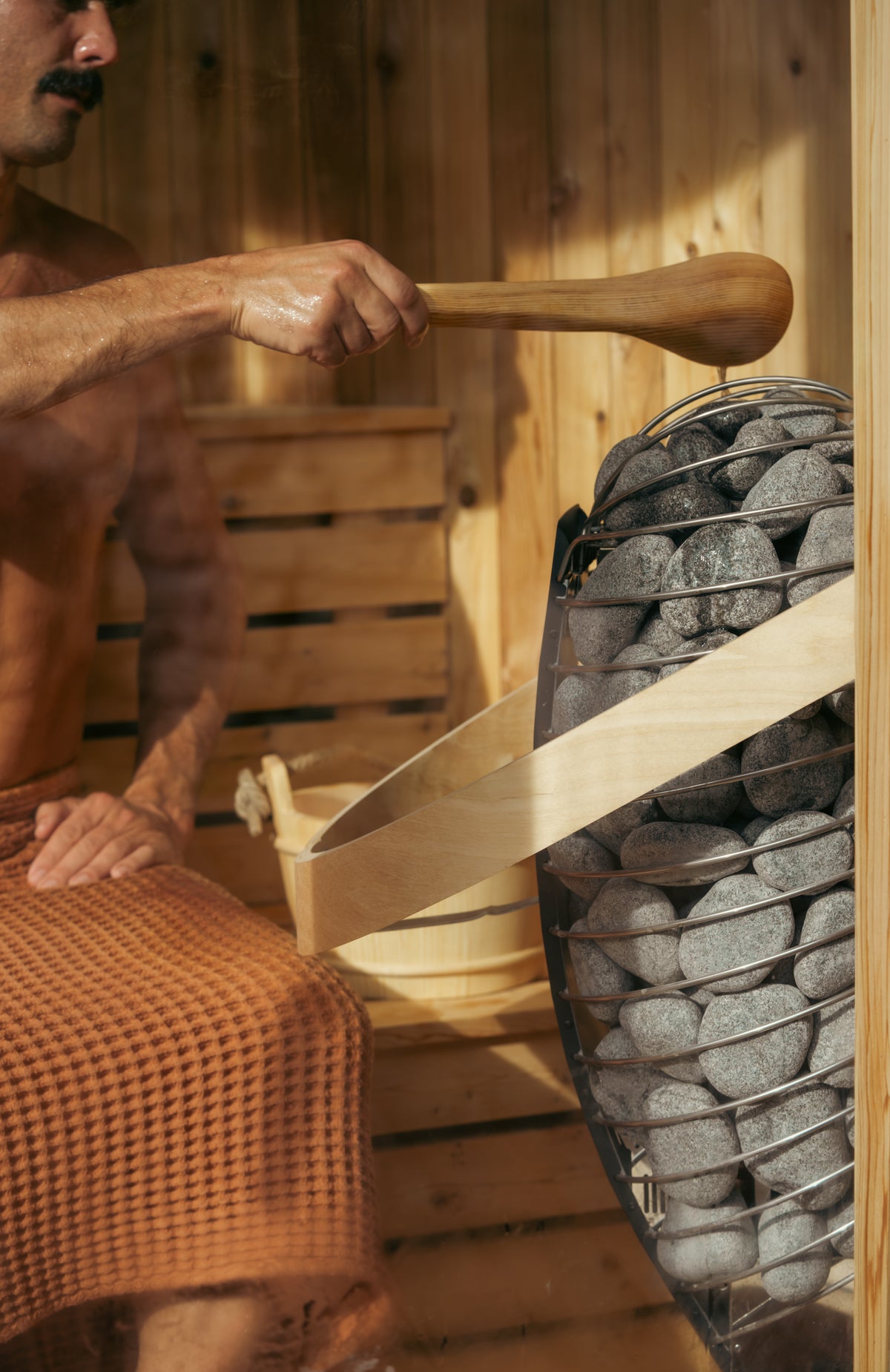
Papilio's bathing spaces will be designed and built with Tubpanga, the Los Angeles alfresco-bathing studio behind these builds — saunas, hot tubs, cold plunges, steam and outdoor showers, crafted from sustainably grown redwood and cedar. Every photo here is real, finished work.


Photography © Tubpanga — shown as Papilio's build partner. "Putting the bath back in nature and you in the bath."
The first Papilio is a pilot-scale thermal compute bathhouse — big enough to prove real heat recovery, small enough to permit, finance, and build.
We'd rather show you the hard parts than hide them.